
這是歷史版本頁面 — 看 NVDA 最新版本
視障者用電腦卡關?NVDA 免費讀屏能做什麼
 NVDA 2010.1
資料更新 2010-03-29
閱讀約 6 分鐘
視覺障礙者或重度視力衰退的人,坐在電腦前不是「看不到螢幕」這麼簡單——是滑鼠游標不知道在哪、視窗開了幾個搞不清楚、網頁讀到哪一段完全沒概念。明明文書、上網、收信都是日常需求,卻因為讀不到畫面,每一步都卡在「現在到底發生什麼事」。這種狀況下,需要的不是放大鏡,而是把螢幕上的文字變成聲音或點字,讓操作者用聽的、用摸的就知道系統狀態。
一般人直覺會想到「把字放大」或「請人幫忙唸」,但前者對全盲沒用,後者不可能隨時在旁邊。系統內建的朗讀功能往往只覆蓋特定程式,遇到網頁或 Office 就斷斷續續。這類工具的切入點,是直接攔截系統和應用程式送出的文字資訊,再用語音合成或點字顯示器輸出,讓使用者在沒有視覺輔助的狀態下,照樣能操作 Windows、瀏覽網頁、編輯文件。
01NVDA 是什麼?裝了之後到底能做什麼?
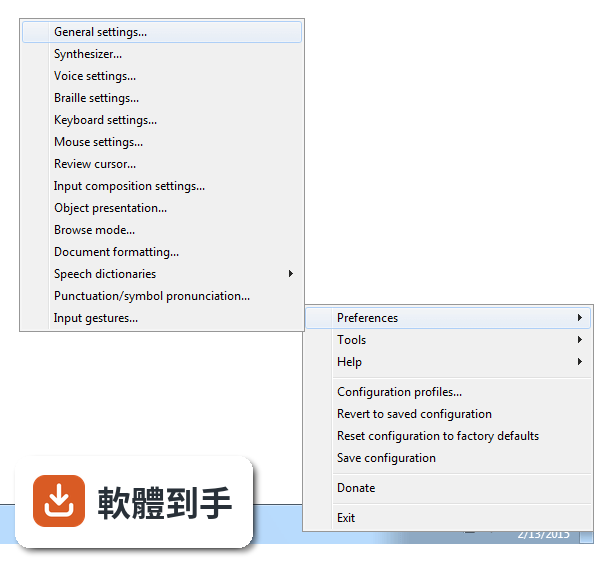
NVDA 是一套免費、開源的螢幕閱讀器,安裝後會用合成語音讀出螢幕上的文字,也能搭配點字顯示器輸出。它讓視障者可以操作 Windows 桌面、瀏覽網頁、使用 Microsoft Office、記事本,以及 Outlook、Thunderbird 等郵件軟體。啟動方式是按下 Ctrl + Alt + N,之後用 Tab 和方向鍵就能在視窗和選單之間移動,系統會即時唸出焦點所在的位置。
02它能不能讀網頁?用鍵盤要怎麼瀏覽?
可以。NVDA 支援 Chrome、Firefox、Edge 等主流瀏覽器,開啟網頁後,用方向鍵上下移動就能逐行讀出文字,按 H 鍵跳到下一個標題,按 K 鍵跳到連結。不需要滑鼠,整頁內容都可以靠鍵盤讀完。遇到圖片或按鈕,它會唸出替代文字或「按鈕」之類的提示,讓你知道這個元素可以做什麼。
03可以接點字顯示器嗎?要怎麼設定?
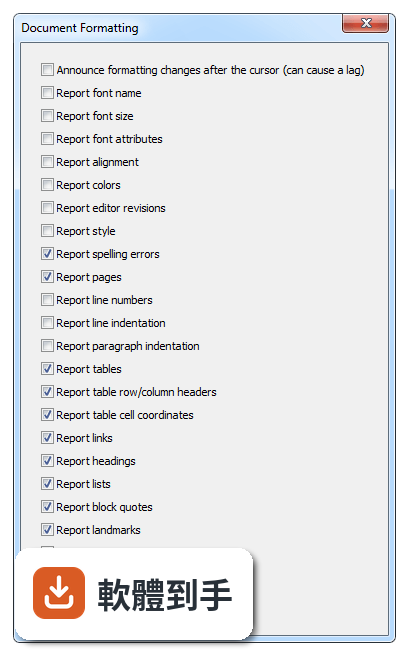
可以。NVDA 支援多種可更新式點字顯示器,透過 USB 或藍牙連線,然後在 NVDA 的設定選單裡找到「點字」項目,選擇你的顯示器型號並調整相關參數。設定完成後,螢幕上的文字會即時轉成點字輸出,適合不想一直聽語音、或需要精確確認拼字的使用者。
04它一定要安裝才能用嗎?能不能帶著走?
不必安裝。NVDA 提供可攜版,可以把程式直接放到 USB 隨身碟裡,插到任何一台 Windows 電腦上就能執行,不需要在該台電腦上安裝軟體。這對需要在不同地方使用電腦的人很方便,例如在學校、圖書館或別人的電腦上,插入隨身碟啟動 NVDA 就能開始操作。
05它支援哪些 Windows 版本?對電腦硬體有要求嗎?
官方說明支援 Windows 7、8、10、11,32 位元和 64 位元都行。硬體需求是處理器 1 GHz 以上、建議 2 GB 記憶體、100 MB 可用磁碟空間,並需要音效輸出裝置來播放語音。點字顯示器是選配,沒有也可以只用語音。整體來說,一般文書用的電腦都跑得動。
06完全看不到的人適合用嗎?還是只有弱視的人能用?
全盲使用者是 NVDA 的主要對象,因為它完全靠語音和點字輸出,不需要任何視覺回饋。弱視的人也可以搭配螢幕放大鏡工具一起使用,NVDA 本身有與放大工具整合的能力,讓還有一點殘餘視力的人同時用聽的和看的來操作。兩種狀況都適用,差別在於怎麼搭配其他輔具。
07不想花錢買商業讀屏軟體的人,用 NVDA 夠嗎?
如果你的需求是讀網頁、用 Office、收發郵件、操作 Windows 基本功能,NVDA 都能勝任,而且完全免費。它更新頻繁,近兩年有多次版本釋出,代表持續在維護。但如果你需要的是商業軟體才有的進階功能,例如更細緻的語音品質或特定專業應用程式的深度整合,NVDA 可能就沒有那些東西。
08它的介面是英文的,不會英文的人能操作嗎?
官方介面語系是英文,但 NVDA 本身支援多種語言的語音輸出,也就是說,它可以用中文或其他語言朗讀螢幕內容。不過,設定選單、快速鍵說明這些操作介面是英文,對完全不懂英文的人來說,初始設定會比較吃力。建議找懂英文的人協助完成第一次設定,之後日常使用主要靠鍵盤指令,不太需要一直看選單。
09有些程式它讀不到,遇到這種情況怎麼辦?
官方說明指出,NVDA 支援大多數標準應用程式,但某些專有或客製化軟體可能功能有限。如果你常用的程式讀不到內容,可以先確認該程式是否有無障礙支援或替代方案,或者改用網頁版。NVDA 本身沒有辦法解決所有應用程式的相容問題,這部分需要自行測試或尋找其他輔助工具搭配。
10它的語音聽起來很機械,會不會影響長時間使用?
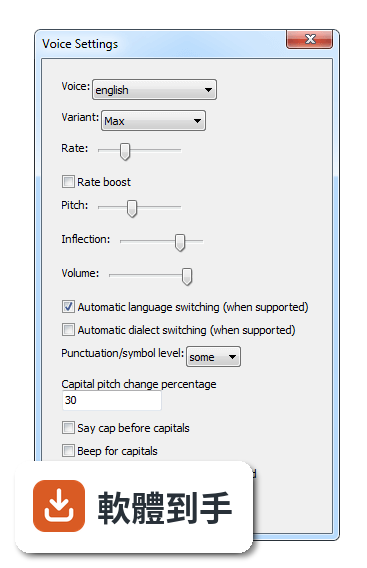
官方說明坦承,NVDA 的語音合成品質比商業付費方案粗糙,聽起來確實比較機械。對長時間聆聽的人來說,這可能造成疲勞,但很多人會透過調整語速、音調和詳細程度來改善。如果你對語音品質非常敏感,可以考慮安裝其他語音引擎,但這需要額外設定,而且效果因人而異。
11跟其他讀屏軟體比起來,NVDA 的評價如何?
在收錄的評分中,NVDA 有 168 人評分,平均 8.18 分(滿分 10 分)。這個分數不算低,但評分人數不算多,參考價值有限。跟它放在一起比較的 Foxit Reader、Adobe Digital Editions、ALLPlayer 都不是讀屏軟體,類別不同,無法直接對比。如果你在考慮付費讀屏,建議先試用 NVDA,確認基本需求能不能滿足,再決定要不要花錢。
下載與官方連結
nvda_2010.1_installer.exe · 11.41 MB · 連結指向軟體原廠
版本紀錄
- 2026-10-26 NVDA 2026.3 66.14 MB
- 2026-05-06 NVDA 2026.1 59.96 MB
- 2026-02-16 NVDA 2025.3.3 48.7 MB
再看 5 筆
- 2025-11-24 NVDA 2025.3.1 48.72 MB
- 2025-11-24 NVDA 2025.3.2 48.72 MB
- 2025-09-15 NVDA 2025.3 48.73 MB
- 2025-08-13 NVDA 2025.2 44.03 MB
- 2025-06-23 NVDA 2025.1.2 42.34 MB
這一版改了什麼
What's new in this version:
New Features:
- NVDA no longer fails to start on a system with no audio output devices. Obviously, a braille display or the Silence synthesiser in conjunction with the Speech Viewer will need to be used for output in this case. (#425)
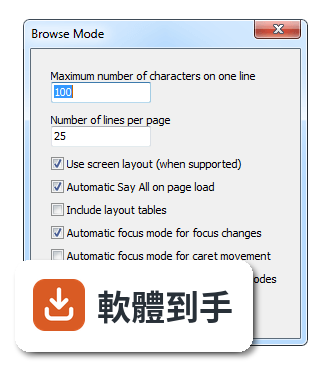
- A report landmarks checkbox has been added to the Document Formatting settings dialog which allows you to configure whether NVDA should announce landmarks in web documents. For compatibility with the previous release, the option is on by default.
- If speak command keys is enabled, NVDA will now announce the names of multimedia keys (e.g. play, stop, home page, etc.) on many keyboards when they are pressed. (#472)
- NVDA now announces the word being deleted when pressing control+backspace in controls that support it. (#491)
- Arrow keys can now be used in the Web formator window to navigate and read the text. (#452)
- The entry list in the Microsoft Office Outlook address book is now supported.
- NVDA better supports embedded editable (design mode) documents in Internet Explorer. (#402)
- a new script (nvda+shift+numpadMinus) allows you to move the system focus to the current navigator object.
- New scripts to lock and unlock the left and right mouse buttons. Useful for performing drag and drop operations. shift+numpadDivide to lock/unlock the left, shift+numpadMultiply to lock/unlock the right.
- New braille translation tables: German 8 dot computer braille, German grade 2, Finnish 8 dot computer braille, Chinese (Hong Kong, Cantonese), Chinese (Taiwan, Manderin). (#344, #369, #415, #450)
- It is now possible to disable the creation of the desktop shortcut (and thus the shortcut key) when installing NVDA. (#518)
- NVDA can now use IAccessible2 when present in 64 bit applications. (#479)
- Improved support for live regions in Mozilla applications. (#246)
- The NVDA Controller Client API is now provided to allow applications to control NVDA; e.g. to speak text, silence speech, display a message in Braille, etc.
- Information and error messages are now read in the logon screen in Windows Vista and Windows 7. (#506)
- In Adobe Reader, PDF interactive forms developed with Adobe LiveCycle are now supported. (#475)
- In Miranda IM, NVDA now automatically reads incoming messages in chat windows if reporting of dynamic content changes is enabled. Also, commands have been added to report the three most recent messages (NVDA+control+number). (#546)
- Input text fields are now supported in Adobe Flash content. (#461)
Changes:
- The extremely verbose keyboard help message in the Windows 7 Start menu is no longer reported.
- The Display synth has now been replaced with a new Speech Viewer. To activate it, choose Speech Viewer from the Tools menu. The speech viewer can be used independently of what ever speech synthesizer you are using. (#44)
- Messages on the braille display will automatically be dismissed if the user presses a key that results in a change such as the focus moving. Previously the message would always stay around for its configured time.
- Setting whether braille should be tethered to the focus or the review cursor (NVDA+control+t) can now be also set from the braille settings dialog, and is also now saved in the user's configuration.
- Updated eSpeak speech synthesiser to 1.43.03.
- Updated liblouis braille translator to 1.8.0.
- In virtual buffers, the reporting of elements when moving by character or word has been greatly improved. Previously, a lot of irrelevant information was reported and the reporting was very different to that when moving by line. (#490)
- The Control key now simply stops speech like other keys, rather than pausing speech. To pause/resume speech, use the shift key.
- Table row and column counts are no longer announced when reporting focus changes, as this announcement is rather verbose and usually not useful.
Bug Fixes:
- NVDA no longer fails to start if UI Automation support appears to be available but fails to initialise for some reason. (#483)
- The entire contents of a table row is no longer sometimes reported when moving focus inside a cell in Mozilla applications. (#482)
- NVDA no longer lags for a long time when expanding tree view items that contain a very large amount of sub-items.
- When listing SAPI 5 voices, NVDA now tries to detect buggy voices and excludes them from the Voice Settings dialog and synthesiser settings ring. Previously, when there was just one problematic voice, NVDA's SAPI 5 driver would sometimes fail to start.
- Virtual buffers now honour the report object shortcut keys setting found in the Object Presentation dialog. (#486)
- In virtual buffers, row/column coordinates are no longer incorrectly read for row and column headers when reporting of tables is disabled.
- In virtual buffers, row/column coordinates are now correctly read when you leave a table and then re-enter the same table cell without visiting another cell first; e.g. pressing upArrow then downArrow on the first cell of a table. (#378)
- Blank lines in Microsoft Word documents and Microsoft HTML edit controls are now shown appropriately on braille displays. Previously NVDA was displaying the current sentence on the display, not the current line for these situations. (#420)
- Multiple security fixes when running NVDA at Windows logon and on other secure desktops. (#515)
- The cursor position (caret) is now correctly updated when performing a Say All that goes off the bottom of the screen, in standard Windows edit fields and Microsoft Word documents. (#418)
- In virtual buffers, text is no longer incorrectly included for images inside links and clickables that are marked as being irrelevant to screen readers. (#423)
- Fixes to the laptop keyboard layout. (#517)
- When Braille is tethered to review when you focus on a Dos console window, the review cursor can now properly navigate the text in the console.
- While working with TeamTalk3 or TeamTalk4 Classic, the VU meter progress bar in the main window is no longer announced as it updates. Also, special characters can be read properly in the incoming chat window.
- Items are no longer spoken twice in the Windows 7 Start Menu. (#474)
- Activating same-page links in Firefox 3.6 appropriately moves the cursor in the virtualBuffer to the correct place on the page.
- Fixed the issue where some text was not rendered in Adobe Reader in certain PDF documents.
- NVDA no longer incorrectly speaks certain numbers separated by a dash; e.g. 500-1000. (#547)
- In Windows XP, NVDA no longer causes Internet Explorer to freeze when toggling checkboxes in Windows Update. (#477)
- When using the in-built eSpeak synthesiser, simultaneous speech and beeps no longer intermittently cause freezes on some systems. This was most noticeable, for example, when copying large amounts of data in Windows Explorer.
- NVDA no longer announces that a Firefox document has become busy (e.g. due to an update or refresh) when that document is in the background. This also caused the status bar of the foreground application to be spuriously announced.
- When switching Windows keyboard layouts (with control+shift or alt+shift), the full name of the layout is reported in both speech and braille. Previously it was only reported in speech, and alternative layouts (e.g. Dvorak) were not reported at all.
- If reporting of tables is disabled, table information is no longer announced when the focus changes.
- Certain standard tree view controls in 64 bit applications (e.g. the Contents tree view in Microsoft HTML Help) are now accessible. (#473)
- Fixed some problems with logging of messages containing non-ASCII characters. This could cause spurious errors in some cases on non-English systems. (#581)
- The information in the About NVDA dialog now appears in the user's configured language instead of always appearing in English. (#586)
- Problems are no longer encountered when using the synthesiser settings ring after the voice is changed to one which has less settings than the previous voice.
- In Skype 4.2, contact names are no longer spoken twice in the contact list.
- Fixed some potentially major memory leaks in the GUI and in virtual buffers. (#590, #591)
- Work around a nasty bug in some SAPI 4 synthesisers which was causing frequent errors and crashes in NVDA. (#597)