
這是歷史版本頁面 — 看 NVDA 最新版本
視障者用電腦卡關?NVDA 免費讀屏能做什麼
 NVDA 2011.1
資料更新 2011-03-07
閱讀約 6 分鐘
視覺障礙者或重度視力衰退的人,坐在電腦前不是「看不到螢幕」這麼簡單——是滑鼠游標不知道在哪、視窗開了幾個搞不清楚、網頁讀到哪一段完全沒概念。明明文書、上網、收信都是日常需求,卻因為讀不到畫面,每一步都卡在「現在到底發生什麼事」。這種狀況下,需要的不是放大鏡,而是把螢幕上的文字變成聲音或點字,讓操作者用聽的、用摸的就知道系統狀態。
一般人直覺會想到「把字放大」或「請人幫忙唸」,但前者對全盲沒用,後者不可能隨時在旁邊。系統內建的朗讀功能往往只覆蓋特定程式,遇到網頁或 Office 就斷斷續續。這類工具的切入點,是直接攔截系統和應用程式送出的文字資訊,再用語音合成或點字顯示器輸出,讓使用者在沒有視覺輔助的狀態下,照樣能操作 Windows、瀏覽網頁、編輯文件。
01NVDA 是什麼?裝了之後到底能做什麼?
NVDA 是一套免費、開源的螢幕閱讀器,安裝後會用合成語音讀出螢幕上的文字,也能搭配點字顯示器輸出。它讓視障者可以操作 Windows 桌面、瀏覽網頁、使用 Microsoft Office、記事本,以及 Outlook、Thunderbird 等郵件軟體。啟動方式是按下 Ctrl + Alt + N,之後用 Tab 和方向鍵就能在視窗和選單之間移動,系統會即時唸出焦點所在的位置。
02它能不能讀網頁?用鍵盤要怎麼瀏覽?
可以。NVDA 支援 Chrome、Firefox、Edge 等主流瀏覽器,開啟網頁後,用方向鍵上下移動就能逐行讀出文字,按 H 鍵跳到下一個標題,按 K 鍵跳到連結。不需要滑鼠,整頁內容都可以靠鍵盤讀完。遇到圖片或按鈕,它會唸出替代文字或「按鈕」之類的提示,讓你知道這個元素可以做什麼。
03可以接點字顯示器嗎?要怎麼設定?
可以。NVDA 支援多種可更新式點字顯示器,透過 USB 或藍牙連線,然後在 NVDA 的設定選單裡找到「點字」項目,選擇你的顯示器型號並調整相關參數。設定完成後,螢幕上的文字會即時轉成點字輸出,適合不想一直聽語音、或需要精確確認拼字的使用者。
04它一定要安裝才能用嗎?能不能帶著走?
不必安裝。NVDA 提供可攜版,可以把程式直接放到 USB 隨身碟裡,插到任何一台 Windows 電腦上就能執行,不需要在該台電腦上安裝軟體。這對需要在不同地方使用電腦的人很方便,例如在學校、圖書館或別人的電腦上,插入隨身碟啟動 NVDA 就能開始操作。
05它支援哪些 Windows 版本?對電腦硬體有要求嗎?
官方說明支援 Windows 7、8、10、11,32 位元和 64 位元都行。硬體需求是處理器 1 GHz 以上、建議 2 GB 記憶體、100 MB 可用磁碟空間,並需要音效輸出裝置來播放語音。點字顯示器是選配,沒有也可以只用語音。整體來說,一般文書用的電腦都跑得動。
06完全看不到的人適合用嗎?還是只有弱視的人能用?
全盲使用者是 NVDA 的主要對象,因為它完全靠語音和點字輸出,不需要任何視覺回饋。弱視的人也可以搭配螢幕放大鏡工具一起使用,NVDA 本身有與放大工具整合的能力,讓還有一點殘餘視力的人同時用聽的和看的來操作。兩種狀況都適用,差別在於怎麼搭配其他輔具。
07不想花錢買商業讀屏軟體的人,用 NVDA 夠嗎?
如果你的需求是讀網頁、用 Office、收發郵件、操作 Windows 基本功能,NVDA 都能勝任,而且完全免費。它更新頻繁,近兩年有多次版本釋出,代表持續在維護。但如果你需要的是商業軟體才有的進階功能,例如更細緻的語音品質或特定專業應用程式的深度整合,NVDA 可能就沒有那些東西。
08它的介面是英文的,不會英文的人能操作嗎?
官方介面語系是英文,但 NVDA 本身支援多種語言的語音輸出,也就是說,它可以用中文或其他語言朗讀螢幕內容。不過,設定選單、快速鍵說明這些操作介面是英文,對完全不懂英文的人來說,初始設定會比較吃力。建議找懂英文的人協助完成第一次設定,之後日常使用主要靠鍵盤指令,不太需要一直看選單。
09有些程式它讀不到,遇到這種情況怎麼辦?
官方說明指出,NVDA 支援大多數標準應用程式,但某些專有或客製化軟體可能功能有限。如果你常用的程式讀不到內容,可以先確認該程式是否有無障礙支援或替代方案,或者改用網頁版。NVDA 本身沒有辦法解決所有應用程式的相容問題,這部分需要自行測試或尋找其他輔助工具搭配。
10它的語音聽起來很機械,會不會影響長時間使用?
官方說明坦承,NVDA 的語音合成品質比商業付費方案粗糙,聽起來確實比較機械。對長時間聆聽的人來說,這可能造成疲勞,但很多人會透過調整語速、音調和詳細程度來改善。如果你對語音品質非常敏感,可以考慮安裝其他語音引擎,但這需要額外設定,而且效果因人而異。
11跟其他讀屏軟體比起來,NVDA 的評價如何?
在收錄的評分中,NVDA 有 168 人評分,平均 8.18 分(滿分 10 分)。這個分數不算低,但評分人數不算多,參考價值有限。跟它放在一起比較的 Foxit Reader、Adobe Digital Editions、ALLPlayer 都不是讀屏軟體,類別不同,無法直接對比。如果你在考慮付費讀屏,建議先試用 NVDA,確認基本需求能不能滿足,再決定要不要花錢。
下載與官方連結
nvda_2011.1_installer.exe · 12.6 MB · 連結指向軟體原廠
版本紀錄
- 2026-10-26 NVDA 2026.3 66.14 MB
- 2026-05-06 NVDA 2026.1 59.96 MB
- 2026-02-16 NVDA 2025.3.3 48.7 MB
再看 5 筆
- 2025-11-24 NVDA 2025.3.1 48.72 MB
- 2025-11-24 NVDA 2025.3.2 48.72 MB
- 2025-09-15 NVDA 2025.3 48.73 MB
- 2025-08-13 NVDA 2025.2 44.03 MB
- 2025-06-23 NVDA 2025.1.2 42.34 MB
這一版改了什麼
What's new in this version:
New Features:
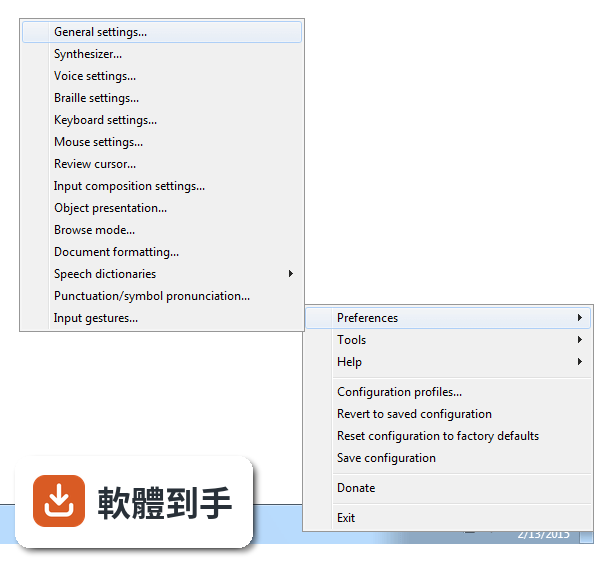
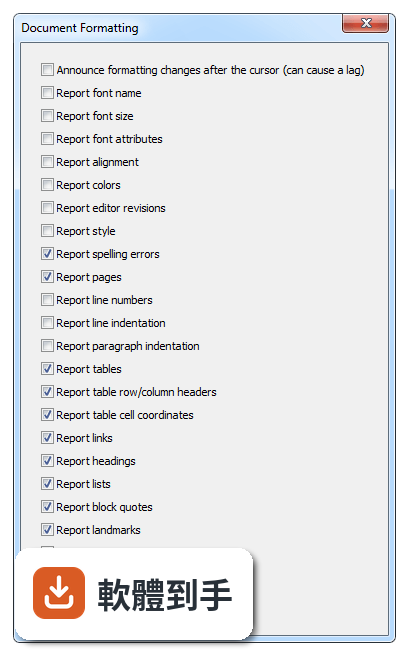
- Colors can now be reported for some controls. Automatic announcement can be configured in the Document Formatting preferences dialog. It can also be reported on demand using the report text formatting command (NVDA+f).
- Initially, this is supported in standard IAccessible2 editable text controls (such as in Mozilla applications), RichEdit controls (such as in Wordpad) and IBM Lotus Symphony text controls.
- In virtual buffers, you can now select by page (using shift+pageDown and shift+pageUp) and paragraph (using shift+control+downArrow and shift+control+upArrow). (#639)
- NVDA now automatically reports new text output in mIRC, PuTTY, Tera Term and SecureCRT. (#936)
- Users can now add new key bindings or override existing ones for any script in NVDA by providing a single user input gesture map. (#194)
- Support for global plugins. Global plugins can add new functionality to NVDA which works across all applications. (#281)
- A small beep is now heard when typing characters with the shift key while capslock is on. This can be turned off by unchecking the related new option in the Keyboard settings dialog. (#663)
- hard page breaks are now announced when moving by line in Microsoft Word. (#758)
- Bullets and numbering are now spoken in Microsoft Word when moving by line. (#208)
- A command to toggle Sleep mode for the current application (NVDA+shift+s) is now available. Sleep mode (previously known as self voicing mode) disables all screen reading functionality in NVDA for a particular application. Very useful for applications that provide their own speech and or screen reading features. Press this command again to disable Sleep mode.
- Some additional braille display key bindings have been added. See the Supported Braille Displays section of the User Guide for details. (#209)
- For the convenience of third party developers, app modules as well as global plugins can now be reloaded without restarting NVDA. Use tools -> Reload plugins in the NVDA menu or NVDA+control+f3. (#544)
- NVDA now remembers the position you were at when returning to a previously visited web page. This applies until either the browser or NVDA is exited. (#132)
- Handy Tech braille displays can now be used without installing the Handy Tech universal driver. (#854)
- Support for several Baum, HumanWare and APH braille displays. (#937)
- The status bar in Media Player Classic Home Cinema is now recognised.
- The Freedom Scientific Focus 40 Blue braille display can now be used when connected via bluetooth. (#1345)
Changes
- Position information is no longer reported by default in some cases where it was usually incorrect; e.g. most menus, the Running Applications bar, the Notification Area, etc. However, this can be turned on again by an added option in the Object Presentation settings dialog.
- Keyboard help has been renamed to input help to reflect that it handles input from sources other than the keyboard.
- Input Help no longer reports a script's code location via speech and braille as it is cryptic and irrelevant to the user. However, it is now logged for developers and advanced users.
- When NVDA detects that it has frozen, it continues to intercept NVDA modifier keys, even though it passes all other keys through to the system. This prevents the user from unintentionally toggling caps lock, etc. if they press an NVDA modifier key without realising NVDA has frozen. (#939)
- If keys are held down after using the pass next key through command, all keys (including key repeats) are now passed through until the last key is released.
- If an NVDA modifier key is pressed twice in quick succession to pass it through and the second press is held down, all key repeats will now be passed through as well.
- The volume up, down and mute keys are now reported in input help. This could be helpful if the user is uncertain as to what these keys are.
- The hotkey for the Review Cursor item in the NVDA Preferences menu has been changed from r to c to eliminate the conflict with the Braille Settings item.
Bug Fixes
- When adding a new speech dictionary entry, the title of the dialog is now "Add dictionary entry" instead of "Edit dictionary entry". (#924)
- In speech dictionary dialogs, the content of the Regular expression and Case sensitive columns of the Dictionary entries list is now presented in the configured NVDA language instead of always in English.
- In AIM, position information is now announced in tree views.
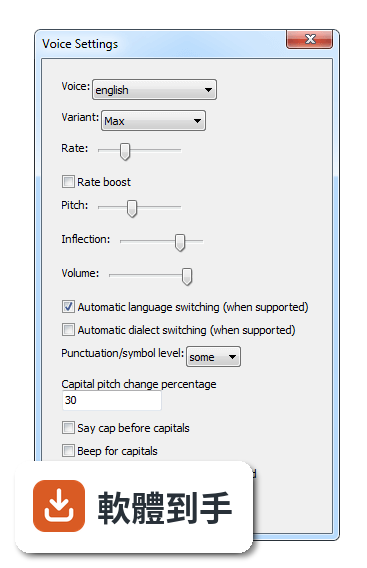
- On sliders in the Voice Settings dialog, up arrow/page up/home now increase the setting and down arrow/page down/end decrease it. Previously, the opposite occurred, which is not logical and is inconsistent with the synth settings ring. (#221)
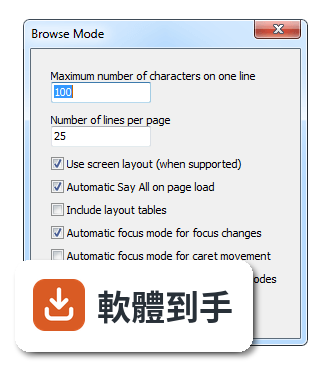
- In virtual buffers with screen layout disabled, some extraneous blank lines no longer appear.
- If an NVDA modifier key is pressed twice quickly but there is an intervening key press, the NVDA modifier key is no longer passed through on the second press.
- Punctuation keys are now spoken in input help even when speaking of punctuation is disabled. (#977)
- In the Keyboard Settings dialog, the keyboard layout names are now presented in the configured NVDA language instead of always in English. (#558)
- Fixed an issue where some items were rendered as empty in Adobe Reader documents; e.g. the links in the table of contents of the Apple iPhone IOS 4.1 User Guide.
- The "Use currently saved settings on the logon and other secure screens" button in NVDA's General Settings dialog now works if used immediately after NVDA is newly installed but before a secure screen has appeared. Previously, NVDA reported that copying was successful, but it actually had no effect. (#1194)
- It is no longer possible to have two NVDA settings dialogs open simultaneously. This fixes issues where one open dialog depends on another open dialog; e.g. changing the synthesiser while the Voice Settings dialog is open. (#603)
- On systems with UAC enabled, the "Use currently saved settings on the logon and other secure screens" button in NVDA's General Settings dialog no longer fails after the UAC prompt if the user's account name contains a space. (#918)
- In Internet Explorer and other MSHTML controls, NVDA now uses the URL as a last resort to determine the name of a link, rather than presenting empty links. (#633)
- NVDA no longer ignores the focus in AOL Instant Messenger 7 menus. (#655)
- Announce the correct label for errors in the Microsoft Word Spell Check dialog (e.g. Not in dictionary, Grammar error, punctuation). Previously they were all announced as grammar error. (#883)
- Typing in Microsoft Word while using a braille display should no longer cause garbled text to be typed, and a rare freeze when pressing a braille routing key in Word documents has been fixed. (#1212) However a limitation is that Arabic text can no longer be read in Word 2003 and below, while using a braille display. (#627)
- When pressing the delete key in an edit field, the text/cursor on a braille display should now always be updated appropriately to reflect the change. (#947)
- Changes on dynamic pages in Gecko2 documents (E.g. Firefox 4) while multiple tabs are open are now properly reflected by NVDA. Previously only changes in the first tab were reflected. (Mozilla bug 610985)
- NVDA can now properly announce the suggestions for grammar and punctuation errors in Microsoft Word spell check dialog. (#704)
- In Internet Explorer and other MSHTML controls, NVDA no longer presents destination anchors as empty links in its virtual buffer. Instead, these anchors are hidden as they should be. (#1326)
- Object navigation around and within standard groupbox windows is no longer broken and asymmetrical.
- In Firefox and other Gecko-based controls, NVDA will no longer get stuck in a subframe if it finishes loading before the outer document.
- NVDA now appropriately announces the next character when deleting a character with numpadDelete. (#286)
- On the Windows XP logon screen, the user name is once again reported when the selected user is changed.
- Fixed problems when reading text in Windows command consoles with reporting of line numbers enabled.
- The Elements List dialog for virtual buffers is now usable by sighted users. All controls are visible on screen. (#1321)
- The list of entries in the Speech Dictionary dialog is now more readable by sighted users. The list is now large enough to show all of its columns on screen. (#90)
- On ALVA BC640/BC680 braille displays, NVDA no longer disregards display keys that are still held down after another key is released.
- Adobe Reader X no longer crashes after leaving the untagged document options before the processing dialog appears. (#1218)
- NVDA now switches to the appropriate braille display driver when you revert to saved configuration. (#1346)
- The Visual Studio 2008 Project Wizard is read correctly again. (#974)
- NVDA no longer completely fails to work in applications which contain non-ASCII characters in their executable name. (#1352)
- When reading by line in AkelPad with word wrap enabled, NVDA no longer reads the first character of the following line at the end of the current line.
- In the Visual Studio 2005/2008 code editor, NVDA no longer reads the entire text after every typed character. (#975)
- Fixed the issue where some braille displays weren't cleared properly when NVDA was exited or the display was changed.
- The initial focus is no longer sometimes spoken twice when NVDA starts. (#1359)