
這是歷史版本頁面 — 看 NVDA 最新版本
視障者用電腦卡關?NVDA 免費讀屏能做什麼
 NVDA 2012.3.1
資料更新 2012-12-13
閱讀約 6 分鐘
視覺障礙者或重度視力衰退的人,坐在電腦前不是「看不到螢幕」這麼簡單——是滑鼠游標不知道在哪、視窗開了幾個搞不清楚、網頁讀到哪一段完全沒概念。明明文書、上網、收信都是日常需求,卻因為讀不到畫面,每一步都卡在「現在到底發生什麼事」。這種狀況下,需要的不是放大鏡,而是把螢幕上的文字變成聲音或點字,讓操作者用聽的、用摸的就知道系統狀態。
一般人直覺會想到「把字放大」或「請人幫忙唸」,但前者對全盲沒用,後者不可能隨時在旁邊。系統內建的朗讀功能往往只覆蓋特定程式,遇到網頁或 Office 就斷斷續續。這類工具的切入點,是直接攔截系統和應用程式送出的文字資訊,再用語音合成或點字顯示器輸出,讓使用者在沒有視覺輔助的狀態下,照樣能操作 Windows、瀏覽網頁、編輯文件。
01NVDA 是什麼?裝了之後到底能做什麼?
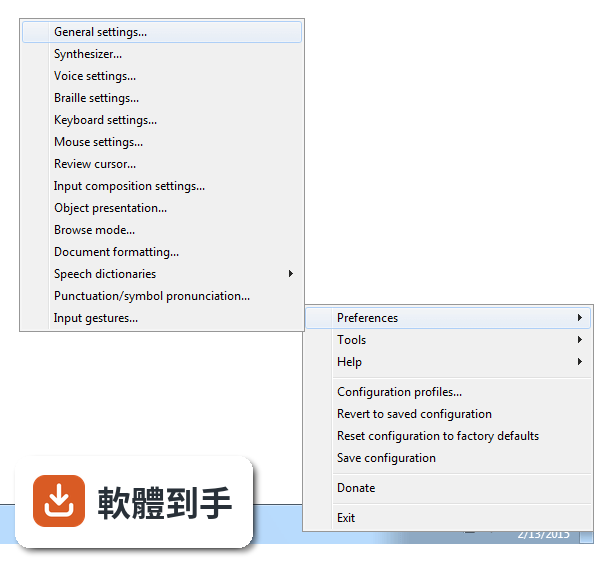
NVDA 是一套免費、開源的螢幕閱讀器,安裝後會用合成語音讀出螢幕上的文字,也能搭配點字顯示器輸出。它讓視障者可以操作 Windows 桌面、瀏覽網頁、使用 Microsoft Office、記事本,以及 Outlook、Thunderbird 等郵件軟體。啟動方式是按下 Ctrl + Alt + N,之後用 Tab 和方向鍵就能在視窗和選單之間移動,系統會即時唸出焦點所在的位置。
02它能不能讀網頁?用鍵盤要怎麼瀏覽?
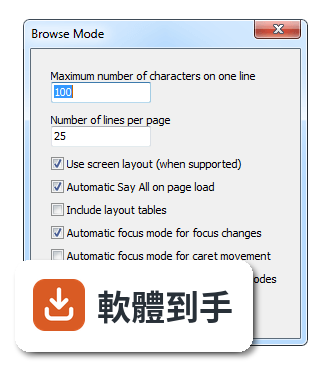
可以。NVDA 支援 Chrome、Firefox、Edge 等主流瀏覽器,開啟網頁後,用方向鍵上下移動就能逐行讀出文字,按 H 鍵跳到下一個標題,按 K 鍵跳到連結。不需要滑鼠,整頁內容都可以靠鍵盤讀完。遇到圖片或按鈕,它會唸出替代文字或「按鈕」之類的提示,讓你知道這個元素可以做什麼。
03可以接點字顯示器嗎?要怎麼設定?
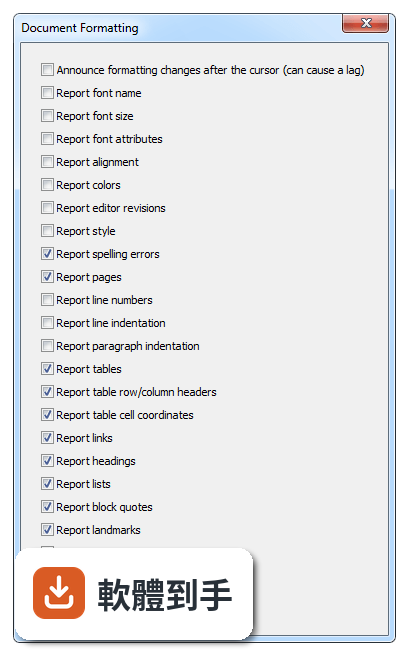
可以。NVDA 支援多種可更新式點字顯示器,透過 USB 或藍牙連線,然後在 NVDA 的設定選單裡找到「點字」項目,選擇你的顯示器型號並調整相關參數。設定完成後,螢幕上的文字會即時轉成點字輸出,適合不想一直聽語音、或需要精確確認拼字的使用者。
04它一定要安裝才能用嗎?能不能帶著走?
不必安裝。NVDA 提供可攜版,可以把程式直接放到 USB 隨身碟裡,插到任何一台 Windows 電腦上就能執行,不需要在該台電腦上安裝軟體。這對需要在不同地方使用電腦的人很方便,例如在學校、圖書館或別人的電腦上,插入隨身碟啟動 NVDA 就能開始操作。
05它支援哪些 Windows 版本?對電腦硬體有要求嗎?
官方說明支援 Windows 7、8、10、11,32 位元和 64 位元都行。硬體需求是處理器 1 GHz 以上、建議 2 GB 記憶體、100 MB 可用磁碟空間,並需要音效輸出裝置來播放語音。點字顯示器是選配,沒有也可以只用語音。整體來說,一般文書用的電腦都跑得動。
06完全看不到的人適合用嗎?還是只有弱視的人能用?
全盲使用者是 NVDA 的主要對象,因為它完全靠語音和點字輸出,不需要任何視覺回饋。弱視的人也可以搭配螢幕放大鏡工具一起使用,NVDA 本身有與放大工具整合的能力,讓還有一點殘餘視力的人同時用聽的和看的來操作。兩種狀況都適用,差別在於怎麼搭配其他輔具。
07不想花錢買商業讀屏軟體的人,用 NVDA 夠嗎?
如果你的需求是讀網頁、用 Office、收發郵件、操作 Windows 基本功能,NVDA 都能勝任,而且完全免費。它更新頻繁,近兩年有多次版本釋出,代表持續在維護。但如果你需要的是商業軟體才有的進階功能,例如更細緻的語音品質或特定專業應用程式的深度整合,NVDA 可能就沒有那些東西。
08它的介面是英文的,不會英文的人能操作嗎?
官方介面語系是英文,但 NVDA 本身支援多種語言的語音輸出,也就是說,它可以用中文或其他語言朗讀螢幕內容。不過,設定選單、快速鍵說明這些操作介面是英文,對完全不懂英文的人來說,初始設定會比較吃力。建議找懂英文的人協助完成第一次設定,之後日常使用主要靠鍵盤指令,不太需要一直看選單。
09有些程式它讀不到,遇到這種情況怎麼辦?
官方說明指出,NVDA 支援大多數標準應用程式,但某些專有或客製化軟體可能功能有限。如果你常用的程式讀不到內容,可以先確認該程式是否有無障礙支援或替代方案,或者改用網頁版。NVDA 本身沒有辦法解決所有應用程式的相容問題,這部分需要自行測試或尋找其他輔助工具搭配。
10它的語音聽起來很機械,會不會影響長時間使用?
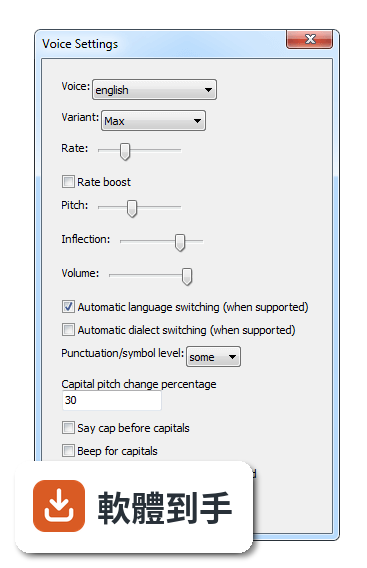
官方說明坦承,NVDA 的語音合成品質比商業付費方案粗糙,聽起來確實比較機械。對長時間聆聽的人來說,這可能造成疲勞,但很多人會透過調整語速、音調和詳細程度來改善。如果你對語音品質非常敏感,可以考慮安裝其他語音引擎,但這需要額外設定,而且效果因人而異。
11跟其他讀屏軟體比起來,NVDA 的評價如何?
在收錄的評分中,NVDA 有 168 人評分,平均 8.18 分(滿分 10 分)。這個分數不算低,但評分人數不算多,參考價值有限。跟它放在一起比較的 Foxit Reader、Adobe Digital Editions、ALLPlayer 都不是讀屏軟體,類別不同,無法直接對比。如果你在考慮付費讀屏,建議先試用 NVDA,確認基本需求能不能滿足,再決定要不要花錢。
下載與官方連結
nvda_2012.3.1.exe · 14.54 MB · 連結指向軟體原廠
版本紀錄
- 2026-10-26 NVDA 2026.3 66.14 MB
- 2026-05-06 NVDA 2026.1 59.96 MB
- 2026-02-16 NVDA 2025.3.3 48.7 MB
再看 5 筆
- 2025-11-24 NVDA 2025.3.1 48.72 MB
- 2025-11-24 NVDA 2025.3.2 48.72 MB
- 2025-09-15 NVDA 2025.3 48.73 MB
- 2025-08-13 NVDA 2025.2 44.03 MB
- 2025-06-23 NVDA 2025.1.2 42.34 MB
這一版改了什麼
What's new in this version:
New Features:
- NVDA can now support Asian character input using IME and text service input methods in all applications, Including: Reporting and navigation of candidate lists, Reporting and navigation of composition strings and Reporting of reading strings.
- The presence of underline and strikethrough is now reported in Adobe Reader documents. (#2410)
- When the Windows Sticky Keys function is enabled, the NVDA modifier key will now behave like other modifier keys. This allows you to use the NVDA modifier key without needing to hold it down while you press other keys. (#230)
- Automatic reporting of column and row headers is now supported in Microsoft Excel. Press NVDA+shift+c to set the row containing column headers and NVDA+shift+r to set the column containing row headers. Press either command twice in quick succession to clear the setting. (#1519)
- Support for HIMS Braille Sense, Braille EDGE and SyncBraille braille displays. (#1266, #1267)
- When Windows 8 Toast notifications appear, NVDA will report them if reporting of help balloons is enabled. (#2143)
- Experimental support for Touch screens on Windows 8, including: Reading text directly under your finger while moving it around; Many gestures for performing object navigation, text review, and other NVDA commands.
- Support for VIP Mud. (#1728)
- In Adobe Reader, if a table has a summary, it is now presented. (#2465)
- In Adobe Reader, table row and column headers can now be reported. (#2193, #2527, #2528)
- New languages: Amharic, Korean, Nepali, Slovenian.
- NVDA can now read auto complete suggestions when entering email addresses in Microsoft Outlook 2007. (#689)
- New eSpeak voice variants: Gene, Gene2. (#2512)
- In Adobe Reader, page numbers can now be reported. (#2534)
- In Reader XI, page labels are reported where present, reflecting changes to page numbering in different sections, etc. In earlier versions, this is not possible and only sequential page numbers are reported.
- It is now possible to reset NVDA's configuration to factory defaults either by pressing NVDA+control+r three times quickly or by choosing Reset to Factory Defaults from the NVDA menu. (#2086)
- Support for the Seika Version 3, 4 and 5 and Seika80 braille displays from Nippon Telesoft. (#2452)
- The first and last top routing buttons on Freedom Scientific PAC Mate and Focus Braille displays can now be used to scroll backward and forward. (#2556)
- Many more features are supported on Freedom Scientific Focus Braille displays such as advance bars, rocker bars and certain dot combinations for common actions. (#2516)
- In applications using IAccessible2 such as Mozilla applications, table row and column headers can now be reported outside of browse mode. (#926)
- Preliminary support for the document control in Microsoft Word 2013. (#2543)
- Text alignment can now be reported in applications using IAccessible2 such as Mozilla applications. (#2612)
- When a table row or standard Windows list-view control with multiple columns is focused, you can now use the table navigation commands to access individual cells. (#828)
- New braille translation tables: Estonian grade 0, Portuguese 8 dot computer braille, Italian 6 dot computer braille. (#2319, #2662)
- If NVDA is installed on the system, directly opening an NVDA add-on package (e.g. from Windows Explorer or after downloading in a web browser) will install it into NVDA. (#2306)
- Support for newer models of Papenmeier BRAILLEX braille displays. (#1265)
- Position information (e.g. 1 of 4) is now reported for Windows Explorer list items on Windows 7 and above. This also includes any UIAutomation controls that support the itemIndex and itemCount custom properties. (#2643)
Changes:
- In the NVDA Review Cursor preferences dialog, the Follow keyboard focus option has been renamed to Follow system focus for consistency with terminology used elsewhere in NVDA.
- When braille is tethered to review and the cursor is on an object which is not a text object (e.g. an editable text field), cursor routing keys will now activate the object. (#2386)
- The Save Settings On Exit option is now on by default for new configurations.
- When updating a previously installed copy of NVDA, the desktop shortcut key is no longer forced back to control+alt+n if it was manually changed to something different by the user. (#2572)
- The add-ons list in the Add-ons Manager now shows the package name before its status. (#2548)
- If installing the same or another version of a currently installed add-on, NVDA will ask if you wish to update the add-on, rather than just showing an error and aborting installation. (#2501)
- Object navigation commands (except the report current object command) now report with less verbosity. You can still obtain the extra information by using the report current object command. (#2560)
- Updated liblouis braille translator to 2.5.1. (#2319, #2480, #2662, #2672)
- The NVDA Key Commands Quick Reference document has been renamed to Commands Quick Reference, as it now includes touch commands as well as keyboard commands.
- The Elements list in Browse mode will now remember the last element type shown (e.g. links, headings or landmarks) each time the dialog is shown within the same session of NVDA. (#365)
- Most Metro apps in Windows 8 (e.g. Mail, Calendar) no longer activate Browse Mode for the entire app.
- Updated Handy Tech BrailleDriver COM-Server to 1.4.2.0.
Bug Fixes:
- In Windows Vista and later, NVDA no longer incorrectly treats the Windows key as being held down when unlocking Windows after locking it by pressing Windows+l. (#1856)
- In Adobe Reader, row headers are now correctly recognised as table cells; i.e. coordinates are reported and they can be accessed using table navigation commands. (#2444)
- In Adobe Reader, table cells spanning more than one column and/or row are now handled correctly. (#2437, #2438, #2450)
- The NVDA distribution package now checks its integrity before executing. (#2475)
- Temporary download files are now removed if downloading of an NVDA update fails. (#2477)
- NVDA will no longer freeze when it is running as an administrator while copying the user configuration to the system configuration (for use on Windows logon and other secure screens). (#2485)
- Tiles on the Windows 8 Start Screen are now presented better in speech and braille. The name is no longer repeated, unselected is no longer reported on all tiles, and live status information is presented as the description of the tile (e.g. current temperature for the Weather tile).
- Passwords are no longer announced when reading password fields in Microsoft Outlook and other standard edit controls that are marked as protected. (#2021)
- In Adobe Reader, changes to form fields are now correctly reflected in browse mode. (#2529)
- Improvements to support for the Microsoft Word Spell Checker, including more accurate reading of the current spelling error, and the ability to support the spell checker when running an Installed copy of NVDA on Windows Vista or higher.
- Add-ons which include files containing non-English characters can now be installed correctly in most cases. (#2505)
- In Adobe Reader, the language of text is no longer lost when it is updated or scrolled to. (#2544)
- When installing an add-on, the confirmation dialog now correctly shows the localized name of the add-on if available. (#2422)
- In applications using UI Automation (such as .net and Silverlight applications), the calculation of numeric values for controls such as sliders has been corrected. (#2417)
- The configuration for reporting of progress bars is now honoured for the indeterminate progress bars displayed by NVDA when installing, creating a portable copy, etc. (#2574)
- NVDA commands can no longer be executed from a braille display while a secure Windows screen (such as the Lock screen) is active. (#2449)
- In browse mode, braille is now updated if the text being displayed changes. (#2074)
- When on a secure Windows screen such as the Lock screen, messages from applications speaking or displaying braille directly via NVDA are now ignored.
- In Browse mode, it is no longer possible to fall off the bottom of the document with the right arrow key when on the final character, or by jumping to the end of a container when that container is the last item in the document. (#2463)
- Extraneous content is no longer incorrectly included when reporting the text of dialogs in web applications (specifically, ARIA dialogs with no aria-describedby attribute). (#2390)
- NVDA no longer incorrectly reports or locates certain edit fields in MSHTML documents (e.g. Internet Explorer), specifically where an explicit ARIA role has been used by the web page author. (#2435)
- The backspace key is now handled correctly when speaking typed words in Windows command consoles. (#2586)
- Cell coordinates in Microsoft Excel are now shown again in Braille.
- In Microsoft Word, NVDA no longer leaves you stuck on a paragraph with list formatting when trying to navigate out over a bullet or number with left arrow or control + left arrow. (#2402)
- In browse mode in Mozilla applications, the items in certain list boxes (specifically, ARIA list boxes) are no longer incorrectly rendered.
- In browse mode in Mozilla applications, certain controls that were rendered with an incorrect label or just whitespace are now rendered with the correct label.
- In browse mode in Mozilla applications, some extraneous whitespace has been eliminated.
- In browse mode in web browsers, certain graphics that are explicitly marked as presentational (specifically, with an alt="" attribute) are now correctly ignored.
- In web browsers, NVDA now hides content which is marked as hidden from screen readers (specifically, using the aria-hidden attribute). (#2117)
- Negative currency amounts (e.g. -$123) are now correctly spoken as negative, regardless of symbol level. (#2625)
- During say all, NVDA will no longer incorrectly revert to the default language where a line does not end a sentence. (#2630)
- Font information is now correctly detected in Adobe Reader 10.1 and later. (#2175)
- In Adobe Reader, if alternate text is provided, only that text will be rendered. Previously, extraneous text was sometimes included. (#2174)
- Where a document contains an application, the content of the application is no longer included in browse mode. This prevents unexpectedly moving inside the application when navigating. You can interact with the application in the same way as for embedded objects. (#990)
- In Mozilla applications, the value of spin buttons is now correctly reported when it changes. (#2653)
- Updated support for Adobe Digital Editions so that it works in version 2.0. (#2688)
- Pressing NVDA+upArrow while on a combo box in Internet Explorer and other MSHTML documents will no longer incorrectly read all items. Rather, just the active item will be read. (#2337)
- Speech dictionaries will now properly save when using a number (#) sign within the pattern or replacement fields. (#961)
- Browse mode for MSHTML documents (e.g. Internet Explorer) now correctly displays visible content contained within hidden content (specifically, elements with a style of visibility:visible inside an element with style visibility:hidden). (#2097)
- Links in Windows XP's Security Center no longer report random junk after their names. (#1331)
- UI Automation text controls (e.g. the search field in the Windows 7 Start Menu) are now correctly announced when moving the mouse over them rather than staying silent.
- Keyboard layout changes are no longer reported during say all, which was particularly problematic for multilingual documents including Arabic text. (#1676)
- The entire content of some UI Automation editable text controls (e.g. the Search Box in the Windows 7/8 Start Menu) is no longer announced every time it changes.
- When moving between groups on the Windows 8 start screen, unlabeled groups no longer announce their first tile as the name of the group. (#2658)
- When opening the Windows 8 start screen, the focus is correctly placed on the first tile, rather than jumping to the root of the start screen which can confuse navigation. (#2720)
- NVDA will no longer fail to start when the user's profile path contains certain multibyte characters. (#2729)
- In browse mode in Google Chrome, the text of tabs is now rendered correctly.
- In browse mode, menu buttons are now reported correctly.
- In OpenOffice.org/LibreOffice Calc, reading spreadsheet cells now works correctly. (#2765)
- NVDA can again function in the Yahoo! Mail message list when used from Internet Explorer. (#2780)