
這是歷史版本頁面 — 看 PostgreSQL 最新版本
資料庫卡卡或鎖死?PostgreSQL 能解決什麼
 PostgreSQL 13.7
資料更新 2022-05-13
閱讀約 6 分鐘
你正在開發一個網站或應用程式,資料量從幾千筆成長到幾十萬筆,原本順暢的查詢開始變慢,甚至偶爾出現「資料庫被鎖住」的錯誤。你想找一個能撐住這種成長、又不會讓你在資料正確性上提心吊膽的資料庫,但市面上選項太多,不知道從哪裡下手。
一般人習慣先用 Excel 或輕量型資料庫(例如 SQLite)撐著,但資料一多、同時讀寫的人一多,這些方案就會開始出現效能瓶頸或鎖定問題。這類工具真正的切入點,是提供一套完整的「關聯式資料庫管理系統」:用結構化的表格存放資料、用 SQL 查詢、支援交易(Transaction)確保資料不會寫到一半出錯,並透過索引、分割區等機制讓查詢在資料量變大時仍然有辦法維持效能。
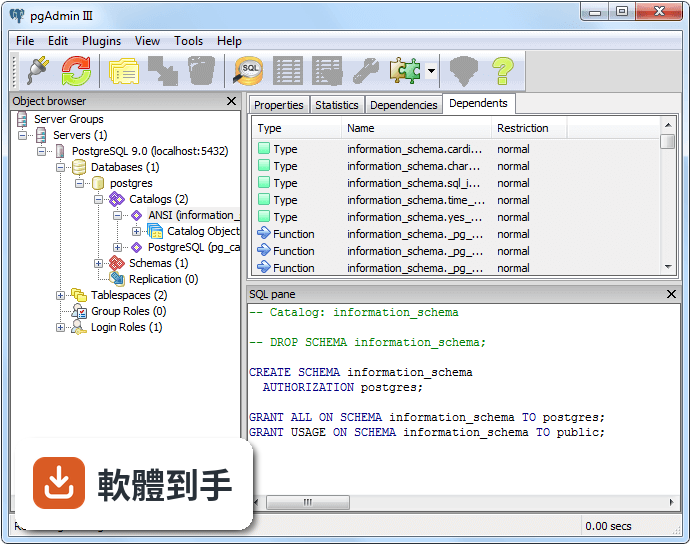
01PostgreSQL 這套軟體到底能做什麼?
它是一套開放原始碼的關聯式資料庫管理系統,主要用途是存放、查詢、管理結構化資料。你可以用它建立多張有關聯的表格,用 SQL 語法做新增、讀取、更新、刪除,並設定主鍵、外鍵、唯一性限制等規則來確保資料正確。它也支援交易、並行控制、備份還原,適合當作網站、應用程式或內部系統的資料後端。
02它支援哪些資料型態?我只存文字和數字夠用嗎?
除了常見的整數、數值、字串、布林值,它還支援日期時間、陣列、範圍、UUID、JSON/JSONB、XML、鍵值對(Hstore),以及點、線、多邊形等幾何資料。如果你需要存圖片、聲音或影片這類大型二進位物件,它也有支援。所以不只是文字數字,半結構化資料或地理位置資料都可以放進來。
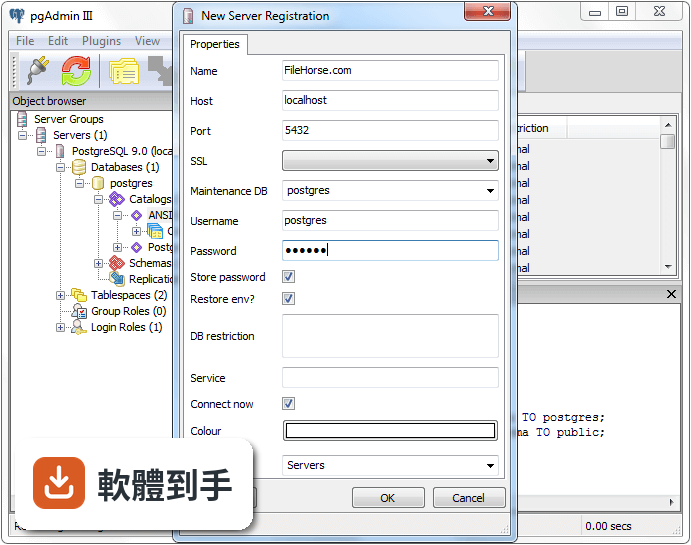
03資料量很大的時候,查詢會不會越來越慢?
它提供多種索引類型,包括 B-tree、多欄位索引、部分索引、GiST、GIN、BRIN 等,也支援表示式索引和覆蓋索引。查詢規劃器會嘗試找出有效率的執行計畫,並支援平行查詢、資料表分割區、JIT 編譯。不過索引要自己設計,不是裝好就自動變快,需要依照實際查詢模式來建立。
04多人同時讀寫,會不會互相卡住或鎖死?
它採用多版本並行控制(MVCC),讓讀取和寫入不會互相阻擋,也支援 SQL 標準定義的所有交易隔離等級,包括 Serializable。你可以設定明確鎖定或建議性鎖定(Advisory Locks)來控制特定情況的並行行為。但要注意,交易隔離等級和鎖定的設定會影響實際行為,需要依照應用情境調整。
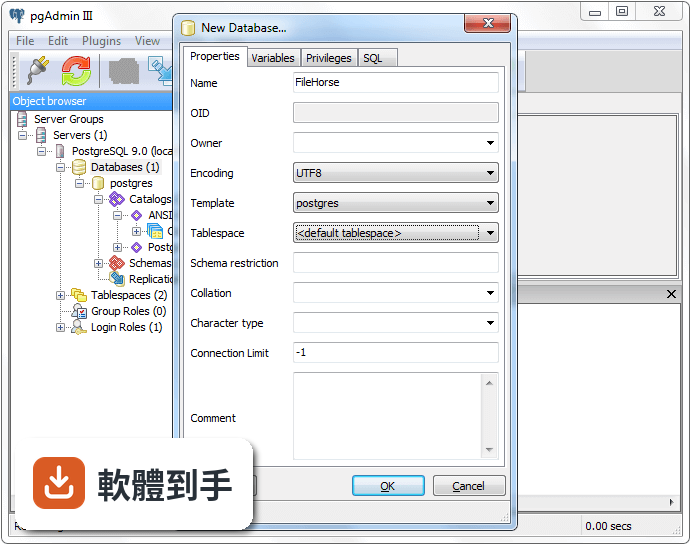
05資料安全方面,它有沒有提供什麼保護機制?
它支援多種身分驗證方式,包括 GSSAPI、SSPI、LDAP、SCRAM-SHA-256、憑證驗證等,也有細緻的存取控制系統,可以做到欄位層級和列層級的安全設定。另外有 Write-ahead Logging(WAL)來確保資料寫入的可靠性,並支援非同步、同步、邏輯複製,以及時間點復原(PITR)和主動備援。
06這套軟體適合什麼樣的人或團隊?
適合需要處理大量結構化資料、重視資料完整性和交易正確性的開發者或團隊。如果你在建置網站後端、內部管理系統、需要跑複雜查詢或報表,而且希望資料庫本身是開放原始碼、不用付授權費,那它會是一個可以考慮的選項。它也適合需要自訂資料型態或函式的人,因為擴充性很強。
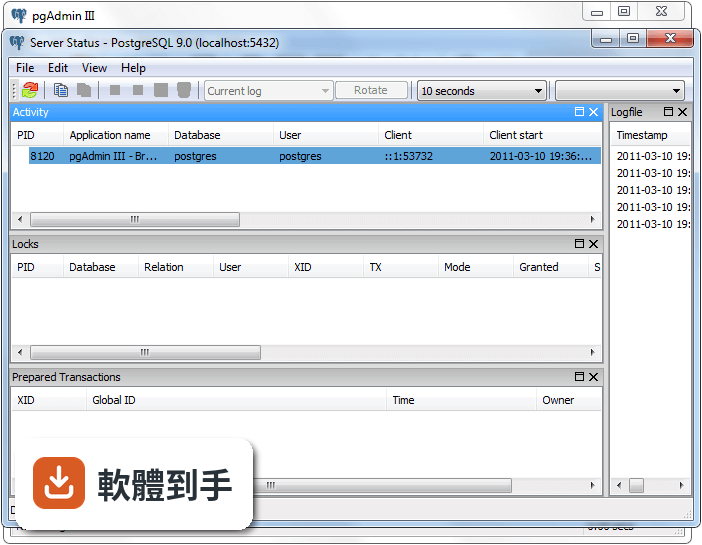
07我只會用圖形介面操作,不會寫指令,這樣能用嗎?
它安裝時會附帶 pgAdmin 圖形介面工具,可以用視覺化方式建立資料庫、執行 SQL 查詢、設定使用者權限、備份還原。但要注意,官方資料提到它「內建的 GUI 管理工具有限」,如果習慣用圖形介面做所有事情,可能會覺得某些進階操作還是得回到指令列。另外介面是英文的,沒有官方中文介面。
08我目前只是做個小專案,資料量不大,用它會不會太重?
它功能完整,但相對的也需要花時間學習和設定。如果只是幾百筆資料、單人使用、不需要複雜查詢,用 SQLite 這類輕量資料庫可能更簡單,不需要安裝伺服器、不需要管理使用者權限。不過如果你預期資料會持續成長,或之後要多人同時連線,提早用它可以省下日後搬移資料的麻煩。
09它的介面只有英文,我英文不好,會不會很難上手?
官方介面和文件都是英文,沒有內建中文語系。如果你英文閱讀有困難,操作上會比較吃力。不過它的文件寫得相當完整,社群也很大,網路上可以找到大量中文教學文章和討論。如果你完全無法閱讀英文,可能需要先評估自己能不能接受看英文文件,或考慮其他有中文介面的資料庫工具。
10我聽說它更新很頻繁,這樣會不會一直要升級、很麻煩?
它的版本更新確實算頻繁,近一年內有多次更新。升級時可能需要手動調整,官方資料也提到「升級可能需要手動調整」。如果你不習慣定期維護資料庫,或沒有專門的人負責這塊,頻繁的版本更新可能會造成額外負擔。但如果不更新,安全性漏洞和 bug 修復就無法取得。
11它跟 MySQL Workbench 或 SQLite 比起來,我該怎麼選?
這取決於你的需求。SQLite 是嵌入式資料庫,適合單機、小規模、不需要伺服器管理的場景;MySQL Workbench 是 MySQL 的圖形介面工具,本身不是資料庫。PostgreSQL 則是一套完整的資料庫伺服器,功能更全面,支援更多進階功能(如自訂型態、多種索引、豐富的資料型態)。如果你需要複雜查詢、高並行、資料完整性要求高,它會是比較完整的方案;如果只是簡單存取,SQLite 可能更輕量。
下載與官方連結
postgresql-13.7-1-windows-x64.exe · 連結指向軟體原廠
版本紀錄
- 2026-10-17 PostgreSQL 18.6 358 MB
- 2026-05-18 PostgreSQL 16.14 349 MB
- 2026-05-17 PostgreSQL 17.10 357 MB
再看 5 筆
- 2026-05-15 PostgreSQL 18.4 357 MB
- 2026-02-27 PostgreSQL 16.13 347 MB
- 2026-02-27 PostgreSQL 17.9 354 MB
- 2026-02-27 PostgreSQL 18.3 355 MB
- 2026-02-13 PostgreSQL 17.8 354 MB
這一版改了什麼
What's new in this version:
Changed:
- Confine additional operations within “security restricted operation” sandboxes
- Autovacuum, CLUSTER, CREATE INDEX, REINDEX, REFRESH MATERIALIZED VIEW, and pg_amcheck activated the “security restricted operation” protection mechanism too late, or even not at all in some code paths. A user having permission to create non-temporary objects within a database could define an object that would execute arbitrary SQL code with superuser permissions the next time that autovacuum processed the object, or that some superuser ran one of the affected commands against it.
- The PostgreSQL Project thanks Alexander Lakhin for reporting this problem. (CVE-2022-1552)
- Fix default signature length for gist_ltree_ops indexes
- The default signature length (hash size) for GiST indexes on ltree columns was accidentally changed while upgrading that operator class to support operator class parameters. If any operations had been done on such an index without first upgrading the ltree extension to version 1.2, they were done assuming that the signature length was 28 bytes rather than the intended 8. This means it is very likely that such indexes are now corrupt. For safety we recommend re-indexing all GiST indexes on ltree columns after installing this update. (Note that GiST indexes on ltree[] columns, that is arrays of ltree, are not affected.)
- Stop using query-provided column aliases for the columns of whole-row variables that refer to plain tables
- The column names in tuples produced by a whole-row variable (such as tbl.* in contexts other than the top level of a SELECT list) are now always those of the associated named composite type, if there is one. We'd previously attempted to make them track any column aliases that had been applied to the FROM entry the variable refers to. But that's semantically dubious, because really then the output of the variable is not at all of the composite type it claims to be. Previous attempts to deal with that inconsistency had bad results up to and including storing unreadable data on disk, so just give up on the whole idea.
- In cases where it's important to be able to relabel such columns, a workaround is to introduce an extra level of sub-SELECT, so that the whole-row variable is referring to the sub-SELECT's output and not to a plain table. Then the variable is of type record to begin with and there's no issue.
- Fix incorrect roundoff when extracting epoch values from intervals
- The new numeric-based code for EXTRACT() failed to yield results equivalent to the old float-based code, as a result of accidentally truncating the DAYS_PER_YEAR value to an integer.
- Defend against pg_stat_get_replication_slot(NULL)
- This function should be marked strict in the catalog data, but it was not in v14, so add a run-time check instead.
- Fix incorrect output for types timestamptz and timetz in table_to_xmlschema() and allied functions (Renan Soares Lopes)
- The xmlschema output for these types included a malformed regular expression.
- Avoid core dump in parser for a VALUES clause with zero columns
- Fix planner failure when a Result plan node appears immediately underneath an Append node (Etsuro Fujita)
- Recently-added code to support asynchronous remote queries failed to handle this case, leading to crashes or errors about unrecognized node types.
- Fix planner failure if a query using SEARCH or CYCLE features contains a duplicate CTE name (Tom Lane, Kyotaro Horiguchi)
- When the name of the recursive WITH query is re-used within itself, the planner could crash or report odd errors such as “could not find attribute 2 in subquery targetlist”.
- Fix planner errors for GROUPING() constructs that reference outer query levels (Richard Guo, Tom Lane)
- Fix plan generation for index-only scans on indexes with both returnable and non-returnable columns
- The previous coding could try to read non-returnable columns in addition to the returnable ones. This was fairly harmless because it didn't actually do anything with the bogus values, but it fell foul of a recently-added error check that rejected such a plan.
- Avoid accessing a no-longer-pinned shared buffer while attempting to lock an outdated tuple during EvalPlanQual
- The code would touch the buffer a couple more times after releasing its pin. In theory another process could recycle the buffer (or more likely, try to defragment its free space) as soon as the pin is gone, probably leading to failure to find the newer version of the tuple.
- Fix query-lifespan memory leak in an IndexScan node that is performing reordering
- Fix ALTER FUNCTION to support changing a function's parallelism property and its SET-variable list in the same command
- The parallelism property change was lost if the same command also updated the function's SET clause.
- Tighten lookup of the index “owned by” a constraint
- Some code paths mistook the index depended on by a foreign key constraint for one owned by a unique or primary key constraint, resulting in odd errors during certain ALTER TABLE operations on tables having foreign key constraints.
- Fix bogus errors from attempts to alter system columns of tables
- The system should just tell you that you can't do it, but sometimes it would report “no owned sequence found” instead.
- Fix mis-sorting of table rows when CLUSTERing using an index whose leading key is an expression
- The table would be rebuilt with the correct data, but in an order having little to do with the index order.
- Prevent data loss if a system crash occurs shortly after a sorted GiST index build
- The code path for building GiST indexes using sorting neglected to fsync the file upon completion. This could result in a corrupted index if the operating system crashed shortly later.
- Fix risk of deadlock failures while dropping a partitioned index
- Ensure that the required table and index locks are taken in the standard order (parents before children, tables before indexes). The previous coding for DROP INDEX did it differently, and so could deadlock against concurrent queries taking these locks in the standard order.
- Fix race condition between DROP TABLESPACE and checkpointing
- The checkpoint forced by DROP TABLESPACE could sometimes fail to remove all dead files from the tablespace's directory, leading to a bogus “tablespace is not empty” error.
- Fix possible trouble in crash recovery after a TRUNCATE command that overlaps a checkpoint
- TRUNCATE must ensure that the table's disk file is truncated before the checkpoint is allowed to complete. Otherwise, replay starting from that checkpoint might find unexpected data in the supposedly-removed pages, possibly causing replay failure.
- Fix unsafe toast-data accesses during temporary object cleanup
- Temporary-object deletion during server process exit could fail with “FATAL: cannot fetch toast data without an active snapshot”. This was usually harmless since the next use of that temporary schema would clean up successfully.
- Re-allow underscore as the first character in a custom parameter name
- Such names were unintentionally disallowed in v14.
- Add regress option for the compute_query_id parameter
- This is intended to facilitate testing, by allowing query IDs to be computed but not shown in EXPLAIN output.
- Improve wait logic in RegisterSyncRequest
- If we run out of space in the checkpointer sync request queue (which is hopefully rare on real systems, but is common when testing with a very small buffer pool), we wait for it to drain. While waiting, we should report that as a wait event so that users know what is going on, and also watch for postmaster death, since otherwise the loop might never terminate if the checkpointer has already exited.
- Wake up for latch events when the checkpointer is waiting between writes (Thomas Munro)
- This improves responsiveness to backends sending sync requests. The change also creates a proper wait event class for these waits.
- Fix “PANIC: xlog flush request is not satisfied” failure during standby promotion when there is a missing WAL continuation record
- Fix possibility of self-deadlock in hot standby conflict handling
- With unlucky timing, the WAL-applying process could get stuck while waiting for some other process to release a buffer lock.
- Fix possible mis-identification of the correct ancestor relation to publish logical replication changes through
- If publish_via_partition_root is enabled, and there are multiple publications naming different ancestors of the currently-modified relation, the wrong ancestor might be chosen for reporting the change.
- Ensure that logical replication apply workers can be restarted even when we're up against the max_sync_workers_per_subscription limit
- Faulty coding of the limit check caused a restarted worker to exit immediately, leaving fewer workers than there should be.
- Include unchanged replica identity key columns in the WAL log for an update, if they are stored out-of-line
- Otherwise subscribers cannot see the values and will fail to replicate the update.
- Cope correctly with platforms that have no support for altering the server process's display in ps(1)
- Few platforms are like this (the only supported one is Cygwin), so we'd managed not to notice that refactoring introduced a potential memory clobber.
- Make the server more robust against missed timer interrupts
- An optimization added in v14 meant that if a server process somehow missed a timer interrupt, it would never again ask the kernel for another one, thus breaking timeout detection for the remainder of the session. This seems unduly fragile, so add a recovery path.
- Disallow execution of SPI functions during PL/Perl function compilation
- Perl can be convinced to execute user-defined code during compilation of a PL/Perl function. However, it's not okay for such code to try to invoke SQL operations via SPI. That results in a crash, and if it didn't crash it would be a security hazard, because we really don't want code execution during function validation. Put in a check to give a friendlier error message instead.
- Make libpq accept root-owned SSL private key files
- This change synchronizes libpq's rules for safe ownership and permissions of SSL key files with the rules the server has used since release 9.6. Namely, in addition to the current rules, allow the case where the key file is owned by root and has permissions rw-r----- or less. This is helpful for system-wide management of key files.
- Fix behavior of libpq's PQisBusy() function after a connection failure
- If we'd detected a write failure, PQisBusy() would always return true, which is the wrong thing: we want input processing to carry on normally until we've read whatever is available from the server. The practical effect of this error is that applications using libpq's async-query API would typically detect connection loss only when PQconsumeInput() returns a hard failure. With this fix, a connection loss will normally be reported via an error PGresult object, which is a much cleaner behavior for most applications.
- Re-allow database.schema.table patterns in psql, pg_dump, and pg_amcheck
- Versions before v14 silently ignored all but the schema and table fragments of a pattern containing more than one dot. Refactoring in v14 accidentally broke that use-case. Reinstate it, but now complain if the first fragment is not the name of the current database.
- Make pg_ctl recheck postmaster aliveness while waiting for stop/restart/promote actions
- pg_ctl would verify that the postmaster is alive as a side-effect of sending the stop or promote signal, but then it just naively waited to see the on-disk state change. If the postmaster died uncleanly without having removed its PID file or updated the control file, pg_ctl would wait until timeout. Instead make it recheck every so often that the postmaster process is still there.
- Fix error handling in pg_waldump
- While trying to read a WAL file to determine the WAL segment size, pg_waldump would report an incorrect error for the case of a too-short file. In addition, the file name reported in this and related error messages could be garbage.
- Ensure that contrib/pageinspect functions cope with all-zero pages
- This is a legitimate edge case, but the module was mostly unprepared for it. Arrange to return nulls, or no rows, as appropriate; that seems more useful than raising an error.
- In contrib/pageinspect, add defenses against incorrect page “special space” contents, tighten checks for correct page size, and add some missing checks that an index is of the expected type
- These changes make it less likely that the module will crash on bad data
- In contrib/postgres_fdw, disable batch insertion when BEFORE INSERT ... FOR EACH ROW triggers exist on the foreign table
- Such a trigger might query the table it's on and expect to see previously-inserted rows. With batch insertion, those rows might not be visible yet, so disable the feature to avoid unexpected behavior.
- In contrib/postgres_fdw, verify that ORDER BY clauses are safe to ship before requesting a remotely-ordered query, and include a USING clause if necessary
- This fix prevents situations where the remote server might sort in a different order than we intend. While sometimes that would be only cosmetic, it could produce thoroughly wrong results if the remote data is used as input for a locally-performed merge join.
- Fix configure to handle platforms that have sys/epoll.h but not sys/signalfd.h
- Update JIT code to work with LLVM 14
- Clean up assorted failures under clang's -fsanitize=undefined checks
- Most of these changes are just for pro-forma compliance with the letter of the C and POSIX standards, and are unlikely to have any effect on production builds.
- Do not add OpenSSL dependencies to libpq's pkg-config file when building without OpenSSL
- Fix PL/Perl so it builds on C compilers that don't support statements nested within expressions
- Fix possible build failure of pg_dumpall on Windows, when not using MSVC to build
- In Windows builds, use gendef instead of pexports to build DEF files
- This adapts the build process to work on recent MSys tool chains
- Prevent extra expansion of shell wildcard patterns in programs built under MinGW
- For some reason the C library provided by MinGW will expand shell wildcard characters in a program's command-line arguments by default. This is confusing, not least because it doesn't happen under MSVC, so turn it off.
- Update time zone data files to tzdata release 2022a for DST law changes in Palestine, plus historical corrections for Chile and Ukraine