
這是歷史版本頁面 — 看 Unity 最新版本
想做遊戲但不知從哪開始,Unity能幫你什麼
 Unity 4.6.0
資料更新 2014-11-26
閱讀約 7 分鐘
你大概有過這種時刻:玩了某款遊戲之後,心裡冒出「這我也做得出來」的念頭,於是打開電腦想找一套能開發遊戲的軟體。結果搜尋到的東西不是太專業看不懂,就是下載下來不知道從哪裡開始,連要建一個角色、讓它動起來都找不到按鈕。你只是想先做一個簡單的小遊戲試試看,卻卡在第一步。
如果從程式語言開始學,光是理解變數、迴圈、物件導向就要花上好幾個月,還沒碰到遊戲畫面就先放棄了。就算找到現成的遊戲範例,也常常因為版本不對、缺少素材、不知道怎麼修改而卡住。這類遊戲開發工具的切入點,是把「寫程式」和「做遊戲」之間的距離縮短——用視覺化的編輯器排列場景、拖曳物件、設定參數,需要寫程式的部分再補上程式碼,同時提供大量現成素材和教學資源,讓你能夠從一個小原型開始,逐步做出完整的遊戲。
01Unity能做什麼類型的遊戲?
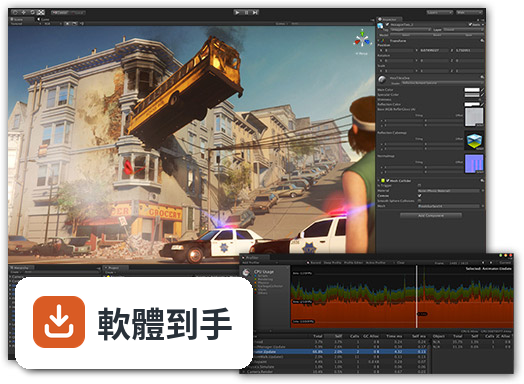
官方說明指出它同時支援2D和3D開發,包含AI尋路工具、UI系統、物理引擎(Box2D和NVIDIA PhysX)、動畫工具、後製特效等,可以製作各種類型的遊戲。官方也提到可以用於VR、AR、手機、桌機、網頁、電視等多種平台。具體想做什麼類型的遊戲,可以參考官方教學和Asset Store的資源。
02它支援哪些平台發布?
官方說明提到可以發布到25個以上平台,包括手機(iOS、Android)、桌機(Windows、Mac)、遊戲主機、電視、VR、AR和網頁。它的跨平台功能可以「build once and deploy to the largest range」,也就是一次建置就能發布到多個平台。但具體支援哪些平台,建議到官方網站確認最新清單。
03免費版有什麼限制?
官方說明提到「Unity 6 Personal - Free Plan」是免費版本,但資格是「Revenue or funding less than $200K in the last 12 months」,也就是過去12個月收入或資金少於20萬美元。超過這個門檻就需要付費方案。免費版包含核心開發平台功能,但可能缺少某些進階功能,建議到官方網站查看免費版與付費版的詳細比較。
04Asset Store是什麼?
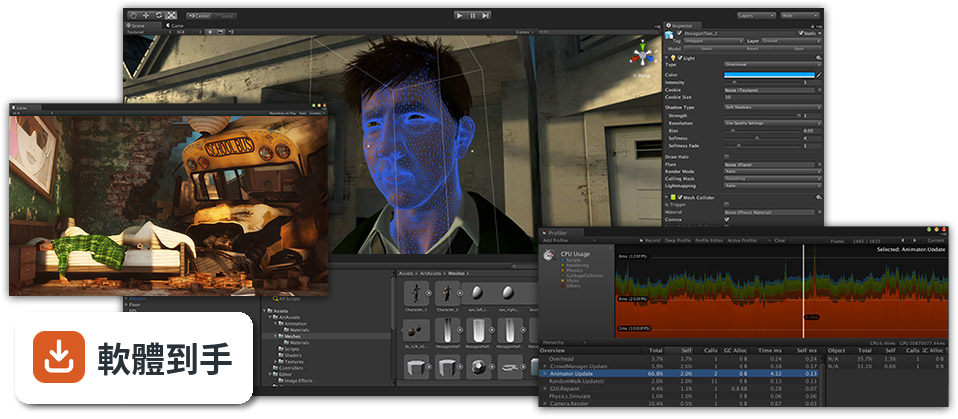
sset Store是Unity的資源商店,官方說明提到裡面有「thousands of quality, ready-made assets」,包括資源、工具、擴充功能等,可以加速專案開發。你可以購買或下載免費的素材、外掛、教學資源等。它同時也是社群分享知識的地方,對初學者來說是很好的學習資源。
05Unity Hub是做什麼的?
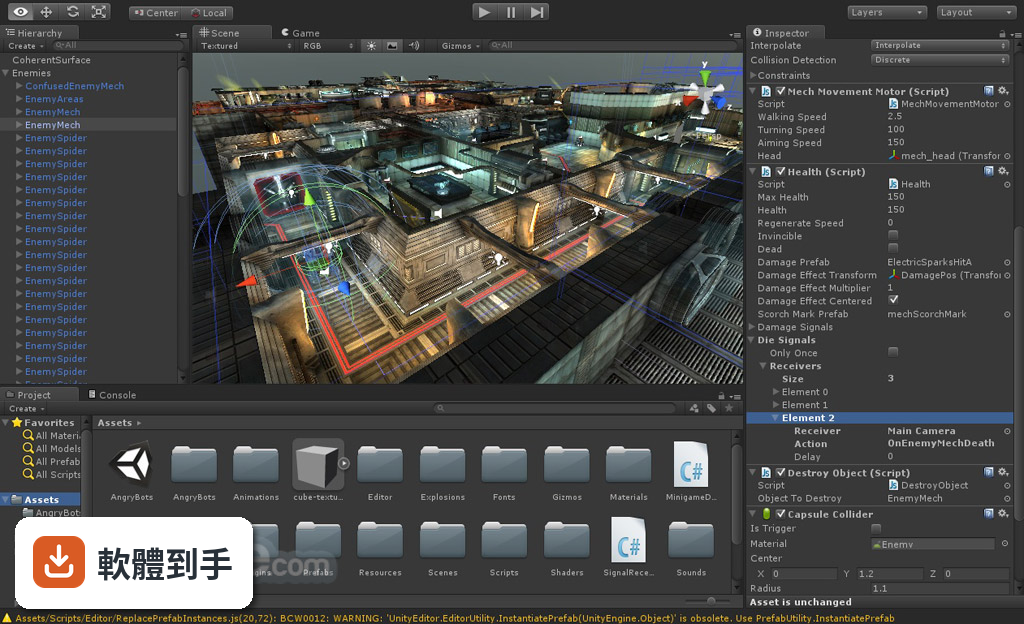
官方說明提到Unity Hub是用來管理多個Unity Editor安裝、建立新專案、存取你的工作的工具。也就是說,你可以用Unity Hub來安裝不同版本的Unity、切換專案、管理編輯器。它算是Unity開發流程的入口,建議先安裝Unity Hub再開始使用。
06完全沒寫過程式的人適合用嗎?
官方說明提到「beginners, students and hobbyists」是目標使用者之一,而且有「tons of tutorials and ready-made assets」可以引導學習。但Unity本身是專業遊戲引擎,需要學習程式語言(C#)和遊戲開發概念。如果完全沒寫過程式,建議先從官方教學和簡單的2D專案開始,逐步學習。
07獨立開發者適合嗎?
官方說明提到「independent developers and studios」是主要使用者,而且免費版就是為了獨立開發者設計的(收入低於20萬美元)。官方也提到「democratizing ecosystem smashes the time and cost barriers」,意思是降低開發時間和成本門檻。如果你是自己一個人或小團隊開發,Unity的資源和社群應該能提供足夠支援。
08學生或業餘愛好者適合嗎?
官方說明提到「beginners, students and hobbyists」是目標使用者,而且有大量教學資源和免費版可以使用。學生可以用免費版學習遊戲開發,業餘愛好者也可以用它來做自己喜歡的專案。但要注意免費版的收入限制,如果未來你的遊戲開始賺錢且超過20萬美元,就需要升級付費方案。
09不會英文的人用這套軟體會很吃力嗎?
這套軟體的介面語系是英文,官方說明也是英文,所以不會英文的話確實會比較吃力。但Unity有龐大的中文社群和教學資源,網路上有許多中文教學影片和文章。建議可以先從中文教學開始學習,同時慢慢熟悉英文介面。如果完全無法接受英文介面,可能需要考慮其他有中文介面的遊戲引擎。
10我公司收入超過20萬美元,還能用免費版嗎?
根據官方說明,免費版的資格是「Revenue or funding less than $200K in the last 12 months」,也就是過去12個月收入或資金少於20萬美元。如果你的公司收入超過這個門檻,就不能使用免費版,需要購買付費方案。建議到Unity官方網站查看最新的授權方案和價格。
11我的電腦還是Windows 7,能用嗎?
官方支援系統包含Windows 7 64位元,所以如果你的電腦是Windows 7 64位元,應該可以安裝使用。但要注意,Windows 7已經停止支援,Unity後續版本可能不再支援Windows 7。建議確認你使用的Unity版本是否支援Windows 7,並考慮升級作業系統以獲得更好的相容性和安全性。
12我只想做簡單的2D小遊戲,用這套軟體會不會太複雜?
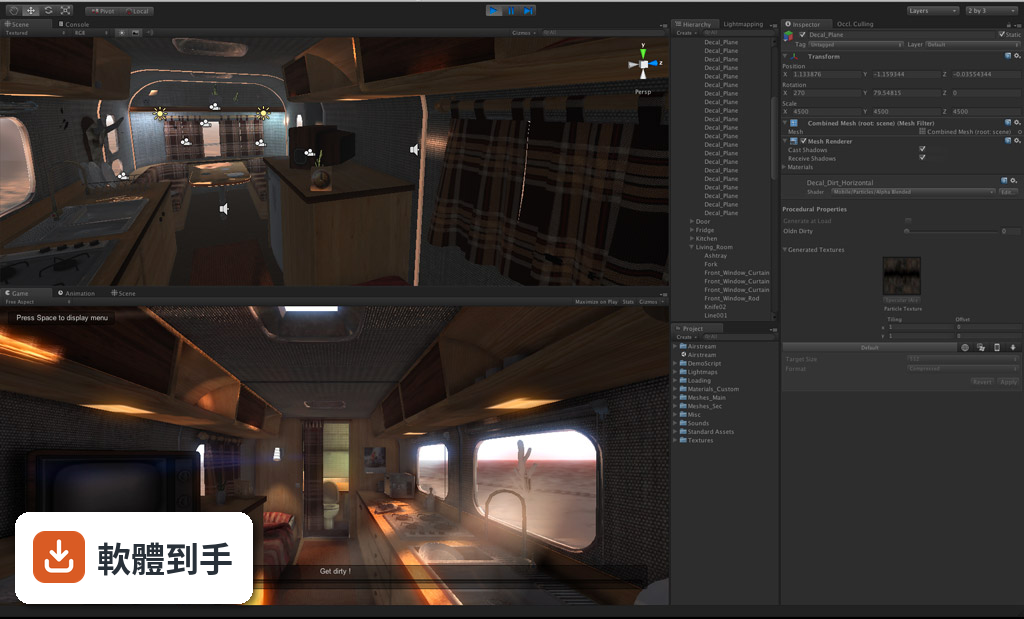
Unity支援2D開發,官方說明提到「The app supports both 2D and 3D development with features and functionality for your specific needs across genres」,所以2D遊戲是沒問題的。但Unity本身是專業引擎,功能很多,學習曲線可能比專門的2D遊戲工具(如GameMaker)陡峭。如果你只想做非常簡單的2D遊戲,可以先從Unity的2D教學開始,評估自己是否能接受它的複雜度。
下載與官方連結
UnitySetup-4.6.0.exe · 1.2 GB · 連結指向軟體原廠
版本紀錄
- 2026-10-31 Unity 6000.6.7
- 2026-10-16 Unity 6000.6.6
- 2026-10-02 Unity 6000.6.4
再看 5 筆
- 2026-09-25 Unity 6000.6.3
- 2026-09-22 Unity 6000.6.2
- 2026-09-18 Unity 6000.6.1
- 2026-09-03 Unity 6000.5.11
- 2026-08-26 Unity 6000.5.10
這一版改了什麼
What's new in this version:
Features:
- New UI System: Design UIs for your game or application using Unity's powerful new component based UI framework and visual tools.
- Create UIs in screen space with or without perspective and with support for pixel perfect alignment, or in world space for simple creation of in-world interactions.
- The layout system combines anchoring to sides, corners, or custom points in the parent container with the ability to stretch to a percentage or full extent of the parent width or height. Simple Scene View handles allows intuitive visual control and tweaking of the positional behavior.
- Build up designs and customized controls composed of image, text, masking, and effects. All graphical components have full support for custom materials and lighting.
- Built-in controls for buttons, sliders, scroll views, input fields and more have been designed for full cross platform deployment, supporting touch controls and mouse as well as directional navigation such as arrow keys or gamepad controls.
- The UI system integrates with Unity’s animation smoothly, meaning that you can use state machines and other animation features to control your UI elements and panels.
- The UI system is designed to be extensible so that it can meet the needs of your projects. Combine existing UI elements together to create new controls, extend existing controls, or write new controls from scratch.
- Easily set up callbacks for your UI controls in the Inspector using the new persistent delegate system. A lot of functionality can be hooked up to your UI with no programming needed!
- New Rect Tool: In previous versions, rect handles were used only in 2D mode and only for SpriteRenderers. With the introduction of the new UI system that is a hybrid of 2D and 3D, more explicit control is needed to be able to efficiently position elements. The new Rect tool in the main Unity toolbar can be used for sprites, UI elements, and any other object as well. The rect handles have also received an overhaul to be more consistent with the other tools, and to be more useful for a wide variety of uses.
- Rect handles now support Pivot/Center mode as set in the toolbar as well Local/Global mode as set in the toolbar.
- Rect handle squashing (holding Control/Command while dragging a side) now supports preserving volume rather than area when holding down Shift.
- Rect handles for objects that appear small in the Scene View now show a disc handle that can be used to move the object in the plane of the rect. When zooming further in, the disc will fade out as the normal rect handles fade in.
- Extensible Event Messaging System: Use and extend the new Event System framework. The system is used for the new UI to send and receive events, but it can be extended to support custom input devices and custom event logic.
- Inbuilt support for touch and standalone.
- Supports 2d, 3d, and UI components.
- Extensible; add custom input handling and custom events.
- Persistent Delegates (Unity Events): A new way to set callbacks via the UI and have them be built into a player. This helps non-programmers quickly add functionality to your application within the editor.
- New Android Build Targets: Support has been added for x86 as a build target. Fat binary support (x86+ARMv7) is supported as well and is the new default.
IMPROVEMENTS
Core Improvements:
- Added smart-allocating GetComponents method which fetches components of type T and grows the list as needed. Non-generic version that supports interfaces has also been added.
- Added StopCoroutine(Coroutine) function.
- Added callback 'OnTransformParentChanged' to MonoBehaviour. This is called whenever a transform, or one of it's parent transforms has been reparented.
- Added Transform.SetParent method that optionally allows setting the parent transform without changing the local position, rotation or scale. For RectTransform it also doesn't change the sizeDelta.
- Implemented and exposed Transform.TransformVector and Transform.InverseTransformVector so it's no longer necessary to use localToWorldMatrix and WorldToLocalMatrix just to transform vectors with scaling included.
- Added Vector2.SmoothDamp to be consistent with Vector3.SmoothDamp, Mathf.SmoothDamp, and others.
- New API TouchScreenKeyboard.isSupported to check if platform supports on screen keyboard.
- Added new WillFlushUndoRecord callback to Undo class.
- Added Input.touchSupported API: it tells whether the device on which application is currently running supports touch input.
Editor Improvements:
- Reorganized GameObject creation menus with categories such as 3D Object, 2D Object, Light, etc. as well as improved functionality.
- "Create Empty" now also appears in the hierarchy Create dropdown.
- The context menu for Game Objects in the hierarchy can now be used to create new Game Objects as children.
- More details on the error message when failing to add a Component due to already having another component that is incompatible.
- If during play mode a hierarchy window takes too long to fetch new data a warning icon will appear to advise users frame rate could be affected based upon the chosen hierarchy sorting.
- Editor: Made Scene View camera near and far clip planes use constant multipliers of size rather than four fixed ranges with fixed values that cause popping when transitioning over the thresholds of those ranges. The new ranges are about the same for close and medium zoom but has significantly larger near clip planes when zoomed far out, which reduces z-fighting.
- Made main Game View used by CameraEditor visualizations and the Canvas be the last focused Game View rather than just the first Game View found.
- Made sure the screen manager uses the correct game view size in the editor, which is only known on the managed side.
- Increased Texture anisotropic level limit to 16 in the Texture Inspector.
- Exposed "Generate Mip Maps" option in the Texture Inspector when in Sprite mode.
- Renamed TextureImporter spritePixelsToUnits to spritePixelsPerUnit and made old property obsolete. The old name was misleading.
- Curves can now be renamed in the animation window.
- Made SerializedProperty.displayName public.
- Enum options generated from SerializedProperty are now nicified just like for all other enum fields in the Inspector.
- Added SerializedProperty.enumDisplayNames that return the names for enum values as they're shown in the Inspector.
Mecanim Improvements:
- Animation of PPtr types are now supported in the animation window (textures, sprites, materials etc).
- SendTransformChanged is now only sent to transforms that are animated. Siblings with no animation will not receive SendTransformChanged.
2D Improvements:
- Default SpritePacker policies will automatically pack mipmapped sprites (padding power - 2).
- Aniso level for sprites with mip-maps now defaults to 16.
- SpritePacker will flood the atlas instead of adding 1 pixel borders to sprites.
- A new pixelsPerUnit property has been exposed on the Sprite class.
Android Improvements:
- Support for profiling Intel GPU using the Unity Editor.
- Added support for BGRA textures.
CHANGES
Editor Changes:
- T is now assigned as default shortcut key for Rect tool. The Sprite Editor trim shortcut key defaults to Shift-T to avoid conflict with the Rect tool.
- Rect handles now do non-uniform scaling by default for consistency with a large range of other applications. Hold down shift to scale uniformly.
- The preference default for script language in the Add Component dropdown has been changed from Javascript to C#, since that's the new default for documentation and examples.
- Renamed spritePixelsToUnits to spritePixelsPerUnit in TextureImporterSettings.
Graphics Changes
- Stencil buffer is now available in Unity Free.
2D Changes
- Sprite Packer is now enabled by default.
- New Sprites now have mip-maps enabled by default.
FIXES
Editor Fixes:
- Fixed occasional argument out of range exceptions when using Scene View tools.
- Picking of locked scene view layers is now prevented.
- ObjectSelector is now ensured to default to the Asset tab when selecting PhysicsMaterial2D objects.
Graphics Fixes
- Fixed an issue where render texture was not being created due unsupported anti aliasing value on devices like Surface RT.
- Compressed sprites are no longer deformed on devices that support NPOT textures.
Animation Fixes
- Fixed issue where changing the animated property to be Rect Transform Scale and trying to transition between 0 and 1 failed.
- Fixed crash when creating an AnimationClip on a humanoid rig.
- Fixes crash when previewing transitions on an Animator with UnscaledTime update mode.
2D Fixes
- Unity no longer crashes if a mesh is dragged onto a SpriteRenderer.
- Fixed issue where 2D colliders break when used as prefab children.
Mobile Fixes
- Windows Phone 8: Fixed a race condition in TouchScreenKeyboard which would cause ".active" to return false just after the keyboard was opened.
- Windows Phone 8.1: Fixed an issue which caused InputField and GUI.TextArea to always receive capital letters from the on screen keyboard.
- Android: Disabled shadows for Intel PowerVR devices to avoid graphics artifacts.